How Recipient List Segmentation Drives Higher Email Engagement
Sending the same email to an entire subscriber list might feel efficient, but it’s one of the fastest ways to undermine engagement. Recipients today expect relevance — messages that speak to their specific interests, behaviors, and stage in the customer journey. This is where list segmentation becomes one of the most powerful tools in a marketer’s arsenal. By dividing a broader audience into smaller, well-defined groups, businesses can deliver content that actually resonates, resulting in measurably higher engagement across every key metric.
What Is List Segmentation?
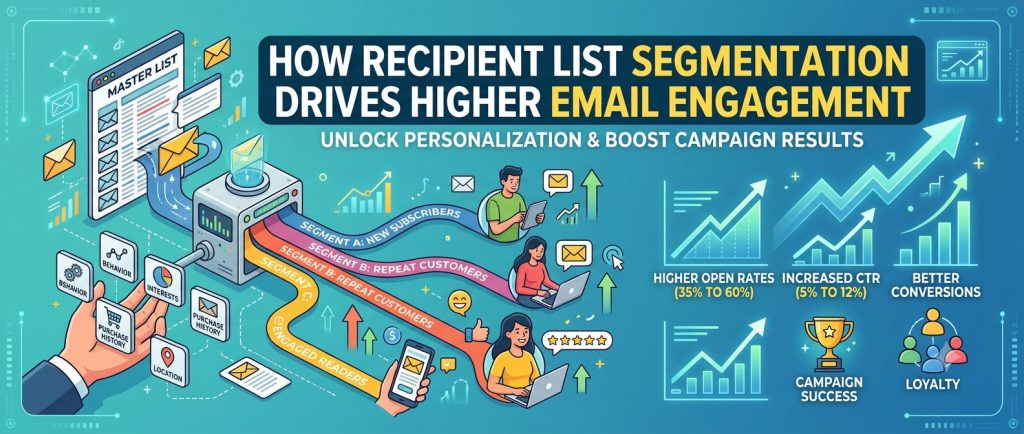
List segmentation is the practice of dividing an email subscriber base into smaller groups based on shared characteristics. These characteristics might include demographics, purchase history, browsing behavior, engagement level, geographic location, or where a subscriber sits in the sales funnel. Instead of sending one generic campaign to everyone, marketers create tailored versions of a message — or entirely distinct campaigns — for each segment.
The goal is simple: replace broad, one-size-fits-all messaging with communication that feels personal and relevant to each recipient.
Why Segmentation Increases Engagement
1. Relevance Drives Action
People respond to content that feels like it was made for them. A segmented campaign that addresses a recipient’s specific needs or interests naturally earns more attention than a generic blast. When someone receives an email about a product category they’ve actually browsed, or a promotion tied to their location, they’re far more likely to open it, read it, and click through.
2. Higher Open and Click-Through Rates
Segmented campaigns consistently show stronger performance because subject lines and content can be tailored to what each group cares about most. A subject line crafted for repeat buyers will differ from one aimed at first-time visitors, and that specificity increases the likelihood of the email being opened rather than ignored or deleted.
3. Reduced Unsubscribe and Spam Complaint Rates
Irrelevant emails are one of the leading reasons subscribers disengage or unsubscribe. When content matches a recipient’s interests and behavior, it feels less like unwanted noise and more like a useful update. This reduces list attrition and helps maintain a healthier, more engaged subscriber base over time.
4. Improved Customer Lifetime Value
Segmentation allows marketers to nurture relationships at every stage — from welcoming new subscribers to re-engaging lapsed customers to rewarding loyal buyers. This stage-appropriate communication builds trust and encourages repeat interactions, which contributes directly to long-term customer value.
5. Better Deliverability Over Time
Engagement metrics like opens and clicks influence how inbox providers treat future emails from a sender. Campaigns that generate strong engagement because they’re well-targeted help build a positive sender reputation, improving the odds that future emails land in the inbox rather than the spam folder.
Common Ways to Segment an Email List
Best Practices for Effective Segmentation
- Start with clear goals. Define what each segment should achieve — whether it’s re-engagement, upselling, or nurturing new leads — before building campaigns around it.
- Use real data, not assumptions. Base segments on actual behavior and verified information rather than guesswork.
- Avoid over-segmenting. Too many narrow segments can fragment resources and dilute campaign efficiency. Group subscribers into segments that are meaningful and actionable.
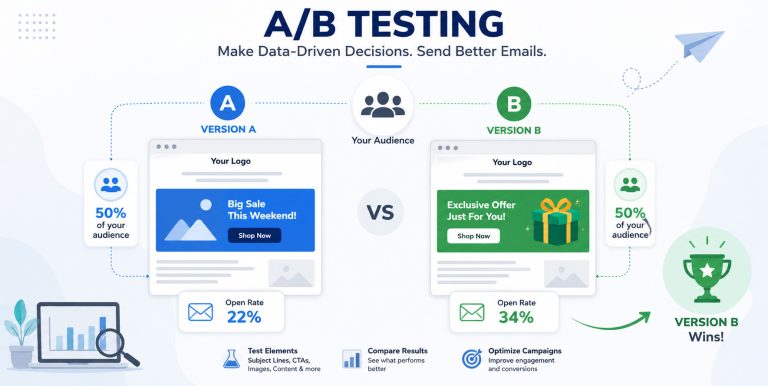
- Test and refine continuously. Track how each segment responds and adjust messaging, timing, and offers based on performance data.
- Combine segmentation with personalization. Segmentation identifies the right audience; personalization tailors the message itself — using a recipient’s name, referencing recent activity, or recommending relevant products.
- Keep segments dynamic. Subscriber behavior changes over time, so segments should update automatically as new data comes in, rather than remaining static.
The Bigger Picture: Segmentation as a Strategic Advantage
Segmentation isn’t just a tactic for improving individual campaign metrics — it’s a shift in how a brand approaches communication altogether. Instead of treating an email list as a single audience, it becomes a collection of distinct relationships, each with its own needs and expectations. This approach allows marketers to be more efficient with their messaging, focus resources on the highest-value opportunities, and build stronger, longer-lasting connections with subscribers.
As inboxes grow more crowded and subscriber attention becomes harder to capture, generic messaging increasingly gets ignored. Businesses that invest in thoughtful segmentation are better positioned to cut through that noise, delivering the right message to the right person at the right time.
Conclusion
Recipient list segmentation is one of the most effective ways to increase email engagement because it aligns communication with what subscribers actually want to hear. From higher open rates to stronger customer loyalty, the benefits extend well beyond a single campaign — they shape the overall health and effectiveness of an entire email marketing program. Marketers who move beyond one-size-fits-all messaging and embrace segmentation position themselves for stronger, more sustainable engagement in an increasingly competitive inbox.